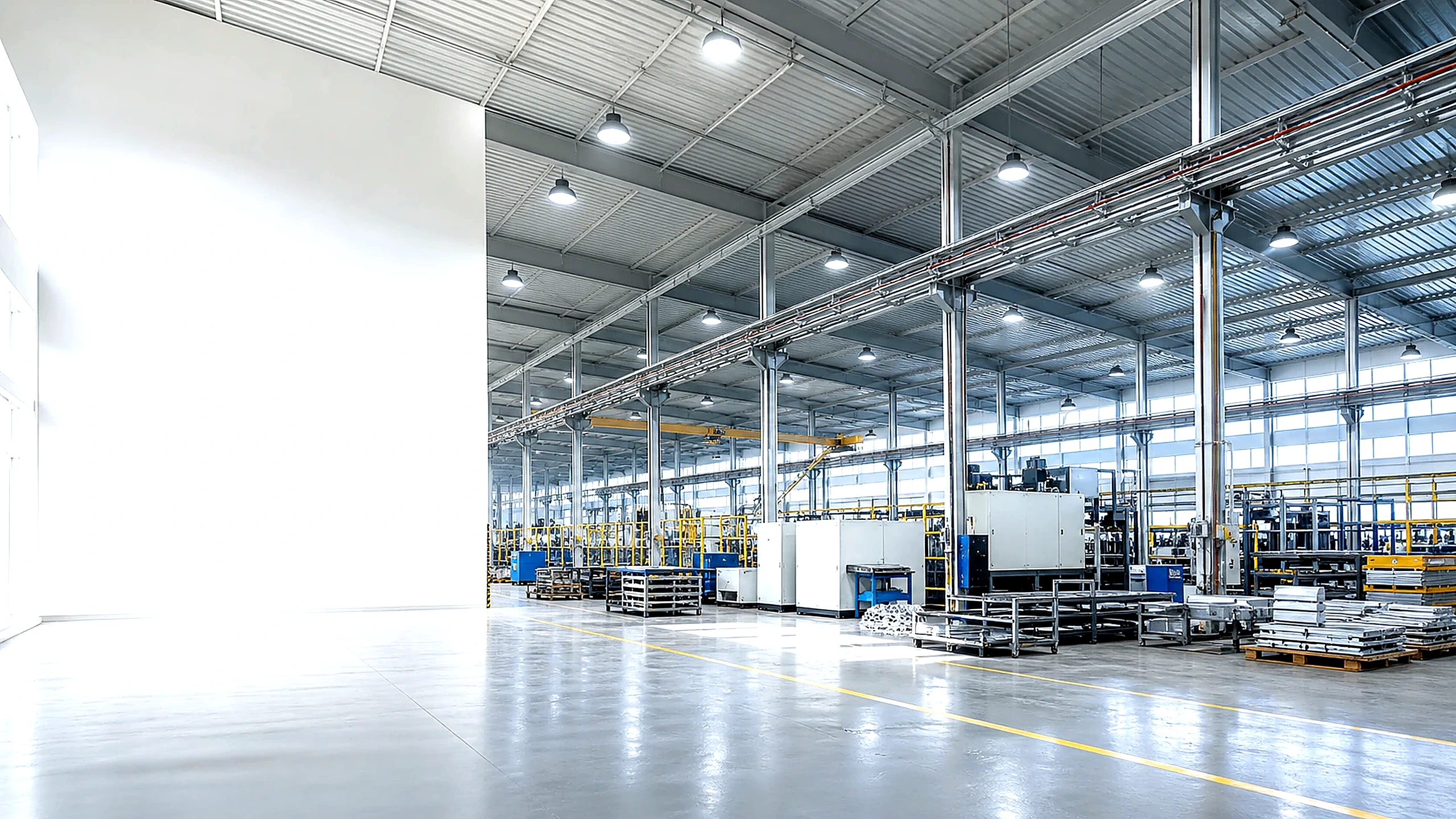
global LED lighting evaluation extends beyond wattage and efficacy to optics, glare, uniformity, flicker, controls and consistent testing. Improve useful illuminance and reduce glare or dark zones through optics, spacing and aiming control. This guide translates the topic into practical site inputs, product checks, implementation steps and acceptance records for industrial lighting projects in Jiangsu, Zhejiang, Shanghai and the Yangtze River Delta.
Quick Takeaways
This section gives procurement and engineering readers the decision points before the detailed guide.
Match High Bay Light to the site environment before comparing wattage or price.
Area, clear height, mounting position, photos, target lux, operating hours and control needs.
A cheap fixture can fail the project if optics, glare, sealing, driver quality or service access are ignored.
Build a one-page project sheet and validate a pilot zone before full procurement.
Project Review Checklist
Before quotation or design review, prepare these inputs so the fixture model, quantity, mounting method and acceptance scope can be checked on the same basis.
Share dimensions, mounting height, ceiling structure, environment, operating hours and photos.
Confirm target illuminance, uniformity, glare control, color temperature and control requirements.
Compare wattage, efficacy, optics, protection rating, driver, mounting accessories and warranty scope.
Clarify wiring, brackets, installation sequence, commissioning and site safety responsibilities.
Keep measurement points, test status, product documents and maintenance requirements clear.
Use related product and case pages to compare similar site conditions and layout decisions.
Who this guide is for
This guide is for procurement teams, factory and warehouse managers, lighting designers, electrical contractors and project owners who need a traceable industrial LED lighting decision.
Use the guide for factories, workshops, warehouses, logistics centers, cold rooms, food or pharmaceutical plants, chemical areas, industrial parks, ports, airports, tunnels and sports facilities where the relevant site conditions are confirmed.
Key industrial lighting selection factors
- Mounting height and illuminance: define the work plane and target lux before choosing wattage.
- Optics and glare: compare beam angle, spacing, aiming, uniformity and visual comfort together.
- Protection and temperature: verify IP/IK, sealing, corrosion, low-temperature start or hazardous-area limits.
- Controls and maintenance: confirm DALI, 0-10V, sensors, manual override, driver access and spare parts.
- Commercial scope: compare manufacturer, model, price, warranty, delivery, installation and commissioning on the same basis.
Recommended product types
Recommended product types should be selected from the application first, then matched with actual parameters, photometric files, installation details and project documents.
Common selection mistakes
- Comparing wattage or unit price without a lighting calculation or pilot test.
- Using a standard luminaire in a cold, wet, corrosive, cleanroom or hazardous environment without verification.
- Ignoring glare, flicker, vertical illuminance, rack shadows or boundary spill light.
- Leaving mounting, wiring, controls, service access and acceptance records out of the quotation scope.
Project inquiry: For a quotation, send site photos, area, mounting height, target lux, operating hours, environment and preferred control method. Yaoqian Lighting can return a product shortlist, layout discussion and project document checklist.
Define the project problem first
Industrial lighting should not be specified by wattage alone. The project brief should define mounting height, work-plane illuminance, uniformity, glare limits, environmental protection, controls, maintenance access and budget boundaries.
The same requirements should be used for supplier comparison, pilot testing and final acceptance so that product claims can be checked against measurable site results.
Project details to confirm first
If the project brief is still incomplete, consolidate it into a one-page input sheet before asking for a quotation. This keeps supplier replies comparable and reduces repeated back-and-forth.
- Application area, process rhythm and daily operating hours.
- Mounting height, pole positions, obstructions and service access.
- Temperature, moisture, dust, corrosion or hazardous-area limits.
- Target illuminance, uniformity and glare limits for each zone.
- Control method, dimming range, fallback behavior and manual override.
- Acceptance records, drawings, photos, wiring notes and maintenance files.
Start with the site, then move to lighting parameters, then lock the acceptance scope.
Selection Matrix by Application
| Application | Product direction | Key review points |
|---|---|---|
| Factory / warehouse | LED high bay or UFO high bay | Height, optics, glare, driver, maintenance access |
| Cold storage / freezer | LED cold-storage light | Low-temperature start, condensation control, IP rating, rack shadows |
| Wet, dusty or clean areas | Tri-proof or cleanroom light | Sealing, cleanability, corrosion resistance, mounting and service |
| Hazardous area | LED explosion-proof light | Zone/classification, temperature class, cable entry, certificates and markings |
| Yard, road or loading area | Floodlight, area light or road light | Pole height, aiming, spill light, surge protection and controls |
Major Chinese standards for project review
Standard status reviewed against official Chinese platforms on 2026-09-29. Confirm the current edition, implementation date, local requirements and contract scope before design, procurement or acceptance.
GB/T 7000.1-2023Luminaires - Part 1: General Requirements and Tests
Current general luminaire safety and test basis, effective from 1 January 2026.
Official recordGB/T 31897.201-2025Luminaire Performance - Part 2-1: Particular Requirements for LED Luminaires
Current particular performance requirements for LED luminaires, effective from 1 May 2026.
Official recordGB/T 5700-2023Methods of Measuring Lighting
Methods for lighting measurements; projects should also define points, instruments, environment and control state.
Official recordGB/T 20145-2006Photobiological Safety of Lamps and Lamp Systems
Photobiological risk evaluation based on product spectrum, test conditions and intended application.
Official recordGB/T 17743-2021Limits and Methods of Measurement of Radio Disturbance from Electrical Lighting
Limits and measurement methods for radio disturbance emissions from lighting equipment.
Official recordSite survey and input checklist
Prepare drawings, dimensions, clear height, fixture positions, structural obstructions, work-plane height, electrical circuits, operating hours and the quantity and wattage of existing luminaires. Add temperature, moisture, dust, corrosion, cleanroom or hazardous-area information where relevant.
- Confirm site inputs for optics, glare and uniformity
- Record design assumptions and measurable acceptance criteria
- Check installation, controls and maintenance access
- Archive product data, commissioning results and follow-up actions
Illuminance, efficacy and optical distribution
Efficacy indicates how efficiently electrical power is converted into light, but optical distribution determines where that light reaches the working plane. Beam angle, spacing, aiming direction, reflection and maintenance factor should be reviewed together.
For high bays, rack aisles, roads, yards and long-throw applications, use photometric files, lighting calculations or a pilot installation instead of comparing wattage or nominal lumens only.
Construction, protection and controls
Check thermal design, driver, input voltage, power factor, surge protection, sealing, cable entry, mounting and service access. Special environments require project-specific confirmation of material, coating, low-temperature, corrosion or explosion-protection limits.
Sensor dimming and zoning can reduce idle energy, but commissioning should also verify trigger range, delay, minimum output, manual override and failure fallback.
Implementation and acceptance workflow
- Record the existing illuminance, power, layout and operating baseline.
- Select product construction, output, optics and controls from the site conditions.
- Test a representative pilot area and adjust spacing, aiming or control settings.
- Complete phased installation with documented safety and shutdown arrangements.
- Repeat measurements and archive product, commissioning and maintenance records.
Improve useful illuminance and reduce glare or dark zones through optics, spacing and aiming control.
Relevant product directions
Typical product searches for this topic include High Bay Light, Explosion Proof Light, Smart Lighting Control, Industrial Park LED Road Light, LED Landscape Garden Light. Product names define a comparison range; final wattage, optics, protection rating and quantity must be confirmed against the actual site.
Procurement Review Path
Use the same project assumptions when comparing suppliers, product specifications and installation scope.
| Review point | What the buyer checks | Where this page helps |
|---|---|---|
| manufacturer / supplier | Company capability, communication speed and project support | contact block, product links and project checklist |
| price / model / specification | Comparable quotation scope and technical parameters | comparison table, parameter notes and product pages |
| installation / wiring | Mounting, cable entry, control method and maintenance access | implementation workflow and acceptance records |
| LED High Bay Light | factory high bay light / warehouse high bay light / industrial high bay light | Start with mounting height, target lux, optics, temperature and controls before comparing wattage, model and price. |
| LED Explosion-Proof Light | LED explosion-proof light / LED explosion-proof light manufacturer / explosion-proof LED model | Provide zone, gas or dust, temperature class, mounting, cable entry, wattage and optics before quotation. |
| LED Cold Storage Light | cold storage light / cold room light / freezer LED light | Confirm minimum temperature, cold start, condensation, rack-aisle optics, sensing and maintenance safety. |
| LED Floodlight | outdoor floodlight / LED floodlight / LED floodlight manufacturer | Review throw distance, pole position, optics, aiming, glare, surge protection and bracket loading before wattage and quantity. |
Related LED luminaires and selection questions
Use product names together with site conditions, mounting height, optics and acceptance requirements when preparing a comparable quotation.
LED High Bay Light
Selection questions:factory high bay light、warehouse high bay light、industrial high bay light、LED high bay light manufacturer、100W LED high bay
Start with mounting height, target lux, optics, temperature and controls before comparing wattage, model and price.
LED Explosion-Proof Light
Selection questions:LED explosion-proof light、LED explosion-proof light manufacturer、explosion-proof LED model、hazardous-area LED fixture、explosion-proof light maintenance
Provide zone, gas or dust, temperature class, mounting, cable entry, wattage and optics before quotation.
LED Cold Storage Light
Selection questions:cold storage light、cold room light、freezer LED light、cold-room light wiring、low-temperature luminaire
Confirm minimum temperature, cold start, condensation, rack-aisle optics, sensing and maintenance safety.
LED Floodlight
Selection questions:outdoor floodlight、LED floodlight、LED floodlight manufacturer、LED floodlight wiring、industrial floodlight price
Review throw distance, pole position, optics, aiming, glare, surge protection and bracket loading before wattage and quantity.
LED Road Light
Selection questions:LED street light、solar street light、LED street light manufacturer、LED road light wattage、100W LED street light
Road width, pole height, spacing, distribution, average illuminance or luminance, uniformity and dimming determine the model.
Comparison and quotation scope
When comparing suppliers, keep model, actual power, efficacy, optics, protection rating, driver, warranty, delivery, installation and control scope in the same table. For high bays, hazardous-area luminaires, tri-proof units, cleanroom lights, cold-storage lights, floodlights and road lights, make sure the sample, photometric file and accessories match the quotation.
If the brief is still conceptual, write a one-page project sheet first: application, area, clear height, environment, target lux, control method, budget and delivery timing. This makes quotation responses easier to compare and supports pilot testing and acceptance later.
Energy Saving and Payback Check
For retrofit articles, calculate energy savings with the same operating assumptions: annual saving = (old total power - new total power) x annual operating hours x electricity price. Then add maintenance reduction, installation cost and control strategy before discussing payback.
Do not treat the formula as a fixed promise; measure the pre-retrofit baseline and verify post-retrofit illuminance before final acceptance.
Selection Questions
What is the relationship between DALI-2, D4i and Zhaga-D4i?
They address digital control, intelligent luminaire data and standardized module interfaces at different layers.
What does CIE S 025 cover?
It provides test methods for LED lamps, LED luminaires and LED modules.
Are IECEx and ATEX interchangeable?
No. Their schemes and regional project requirements differ and must be checked for the target market.
Project documentation advice
Keep datasheets, photometric files, quotations, inspection reports, installation drawings, wiring diagrams, control notes, acceptance records and spare-part lists together so the project can be reviewed later without extra cleanup. For news content, use specific product names and site conditions rather than repeating the generic phrase “industrial lighting” too often.
Primary international sources
Source pages may be updated by their publishers; verify the current version and project applicability before procurement.
Contact Suzhou Yaoqian Intelligent Technology Co., LTD
Since 2006, Suzhou Yaoqian Intelligent Technology Co., LTD has worked on LED sources, thermal design, optics, industrial luminaires and smart controls. The team supports product selection, parameter review and project coordination.
Contact: Mr. Xie · +86 13915532167 · xieming113@163.com